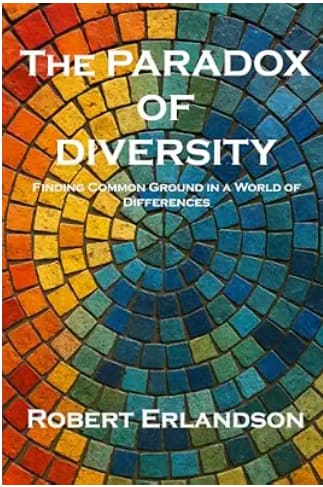
Read The Paradox of Diversity if you want positive, clear insights into the challenges and power of diversity that are affecting every moment of the human experience. Erlandson puts morality front and center, unlike most treatments of diversity. It makes this case: diversity is a gift from God that needs to be embraced, not withstanding a natural and necessary tension it brings along with it. The moral state of the world and its treatment of people make this book timely. It says our differences should not be treated as threats.
For outlook and substance, this work draws on the scholarly writings of Rabindranath Tagore1 and especially Jonathan Sacks2. Major religions of the world all show consistent respect and value for diversity, but Erlandson’s strong case does not rely on indoctrination.
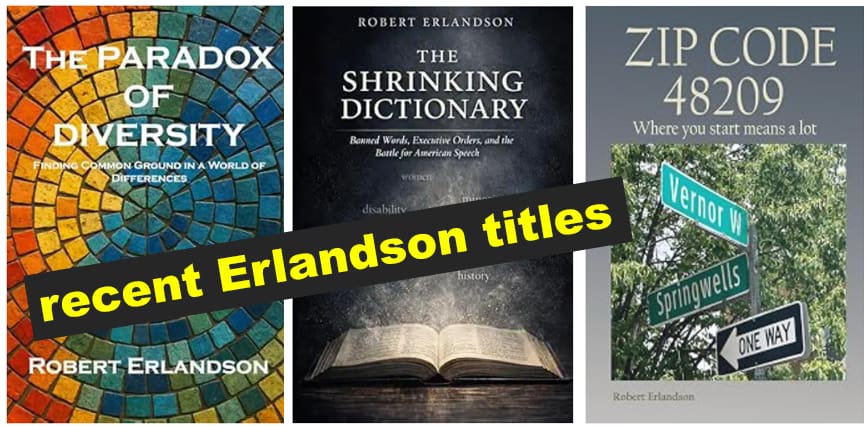
This cover image is fractal based. The book makes liberal use of delightful graphics.
The Paradox of Diversity shows the sacredness of human differences, while making it comprehensible and even entertaining for most people. Erlandson accomplishes this through vignettes, each characterized by a creative blend of prose, poetry, and haiga. Each vignette makes meaningful points that can stand alone, and collectively they make a profound cohesive case for diversity. The book is more unique than traditional in its flow, which is attractive.
A Civic Contribution
This written work provides a tremendous civic service by bringing man’s large moral issues – which are universally affected by diversity – into an understanding that is useful for thinking caring people. This is a far-reaching and forward orientation, with examples and ideas for application, or for rethinking responsibility and dignified belonging. If you are curious or want to deepen your understanding of diversity, this book does not disappoint.
The Paradox of Diversity is Robert Erlandson’s fifth book in the Circle Publications series and is available on Amazon. Erlandson is a Detroit native. He grew up in the city’s eclectic southwest neighborhood, which spurred his interest in diversity and influenced his conclusions. Go here for more on Erlandson’s writing and art.
Book’s Cited References
- Rabindranath Tagore {1861 – 1941], Bengali poet, novelist, educator, Nobel Laureate for Literature
- Jonathan Henry Sacks, Baron Sacks {1948 – 2020], rabbi, philosopher, theologian, and author.