
Imagine an older person suddenly experiences a significant loss of balance. It is a real problem that can be very upsetting (pun intended). This person needs to figure out what is wrong and get relief. Within our reality of May 2026, AI cannot be avoided, healthcare relief won’t come without experiencing AI in action. AI is not fully operational. Still, its beginnings are in plain sight and opportunities for more are visible and expected within healthcare.

Jim Sutton
Further, this person has awareness of technology and is familiar with navigating through the healthcare system. Technical knowledge came to me before retiring, functioning as a technology consultant within the Fortune 50 of yesterday. The healthcare navigation capability was learned working to keep myself healthy over the last decade.
This story is from Oakland County, Michigan, just outside Detroit. Healthcare services and doctors in the area are generally quite competent and readily available. They cater to diverse people, of course featuring those associated with automotive.
AI in action starts with your research
You might find yourself with a medical problem or condition new to you or which you don’t fully understand. It’s almost second nature to “google” your symptoms and learn what the condition might be. That’s you getting started with personal healthcare research.
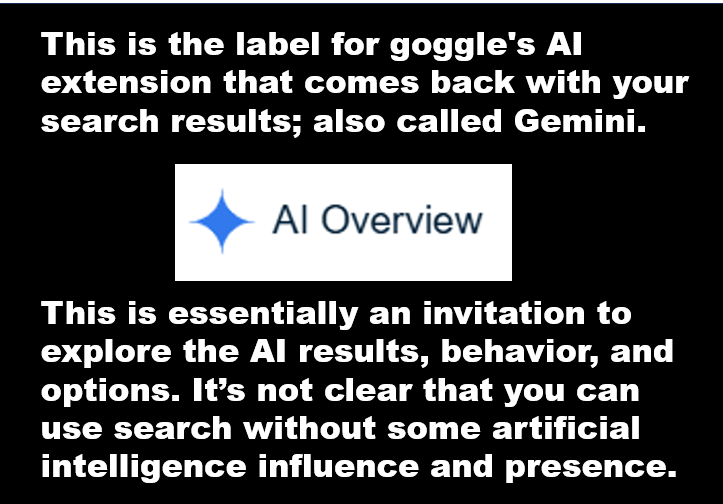
Google Search and Microsoft Bing are the most prominent of the publicly available search engines. Such tools can be used on the internet to query and gain access to any topic of interest. Search engines have supplemental extensions that are explicitly AI oriented, and which are increasingly being directly incorporated into all searches. For example, the “AI Overview” is essentially a flag to let you know AI is involved. Behind it are AI results, even if you didn’t ask for them. It invites you to explore more if you like what you are seeing.
My “research”, what I wanted to know about before talking to doctors, was to learn what could cause a sudden precipitous loss of balance, leaving me unable to walk with confidence.
Healthcare’s use of AI to support scheduling and help desk activities
Healthcare is one of the industries using AI to improve their help desk and scheduling functions. Helpdesk and scheduling are “customer (patient) facing” functions, so these impact satisfaction levels and the ability to get new customers. These have chronically been areas of poor performance and frustration. They are important. Plus, they are outside the more controlled purview of actual healthcare delivery. So, companies can more freely put AI in action to try and make help desk and scheduling better.
Help Desk
With a help desk using AI, the “help person” is really an “AI bot”, a virtual or digital robot. The bot is the entity with which you interact. Some of the interaction can be phone, but text is the most used medium. The bot has the advantage of top level “smarts” and an ability to work at your pace or cadence. For example, you might leave an interaction for a day or even two and come back to it. There is no time out or getting lost. The AI bot isn’t tired or anxious to go home, nor is it hurrying to fill a quota. Learning might come into play when the bot assesses your ability to handle recommendations. As with any other healthcare interaction, the usual “liability of advice” disclaimers come from the bot. That is, the bot says to consult with your doctor before taking action.
Scheduling
Scheduling is affected by physician decisions reflecting your condition/affliction, availability of the healthcare at issue, and your perceived ability and anticipated manner of payment. In a brave new world, this could be much coordinated and improved. AI cannot yet wave this web.
This patient was told to undertake a particular neurologic test. There was much contention for the test (many were trying to secure it), and thirty or so agencies who gave the test had highly variable ways of scheduling. It was chaotic, and the only agency that could respond (actually schedule the test), claimed to be “fully” AI powered. This was a first example of what it might mean for AI to be an only option.
AI in Healthcare Delivery
Physical Therapy
It was relatively easy to get physical therapy scheduled and underway. Patients routinely came in and were greeted by name as they passed the front desk and again at the first work station. Interestingly, these personal greetings took place although they had never been introduced. Some workers had tablets that detailed patient program status and next steps. A therapist confirmed that a camera alerted therapists (those with tablets) of patient names as patients entered the door, which made service more personal. This also enabled attendance to be automatically facilitated and tracked. The front desk was prompted if certain special action was needed (like scheduling additional sessions). The facial recognition camera was a true element of AI in action.
Neurosurgery
As analysis of the loss of balance continued, neurosurgeons assumed control of the diagnosis and the associated course of action. In short order, surgery relieved a spinal cord compression and stabilized the relevant neck vertebrae. There was no patient-visible AI in use. To date, the imbalance condition is no longer in evidence.
Lessons of Healthcare AI in Action
Observations and Conclusion
From a commoner’s perspective, that of an active user, healthcare services are becoming harder to secure. At least that is the case in my community, from my limited perspective, as regards, for example, seeing a doctor. Plus, services that were routinely covered by Medicare, for example a bone density test, are at least in some cases now denied. This is to suggest it is a challenging time for the entry of substantial new technology, like updated AI.
Another current complication is that, more than normal, associations of doctors, practices, clinics, and hospitals seem to be undergoing changes and restructuring. This has resulted in a burst of associated system changes, which might or might not be AI. Evidently, there is plenty of investment money. These changes place increased demands on the patient/user, including new logins, passwords, portals, and associated security concerns. Simultaneously, this produces an increase in disconnected systems, rules, and communication failures, all without training or meaningful sensitivity to the struggles of patients, including system interface challenges. Maybe it is due to AI, but there is marked increase in requirements to repeatedly re-enter patient details, even if the prompting is sometimes more efficient.
Basically, the problem state is showing no signs of improving. These are a sample of the problems that always plague healthcare systems.
So, this story ends with a prediction that AI will suffer from the same old problems as other deployments. The challenge is particularly true for AI “for the masses”, which it must be for healthcare. Certainly, there will be controlled AI success cases. An important question might be whether healthcare AI can truly learn through rapid restarts, and how well can that be managed.
Social Commentary
Since societies formed, there has been the running challenge of productively deploying technology as fast as it becomes available. Now the rate of change is almost unfathomable, so it might require AI to deploy AI. That in itself would be a case for controls and standards and laws.
When the concepts and opportunities of artificial intelligence appeared about fifty years ago, it was a bump in the road. It raised the stakes. What is productive? How should it be used? The USA had a clear leadership role back in the day. But the deployment sputtered and the USA is a contender rather than the leader.
This story needs an incredible contrast to be pointed out. Healthcare is second only to warfare in terms of investment and eagerness to deploy.
AI could be humanely applied along the lines of the greatest good for the greatest number, where even those without the means to google their problem might benefit. But that’s not likely to happen when deployment of the technology is driven by unconstrained lust for control and profit.